1. Select a discrete app icon.








notes
This article was originally published in 2022. It was updated in 2026.
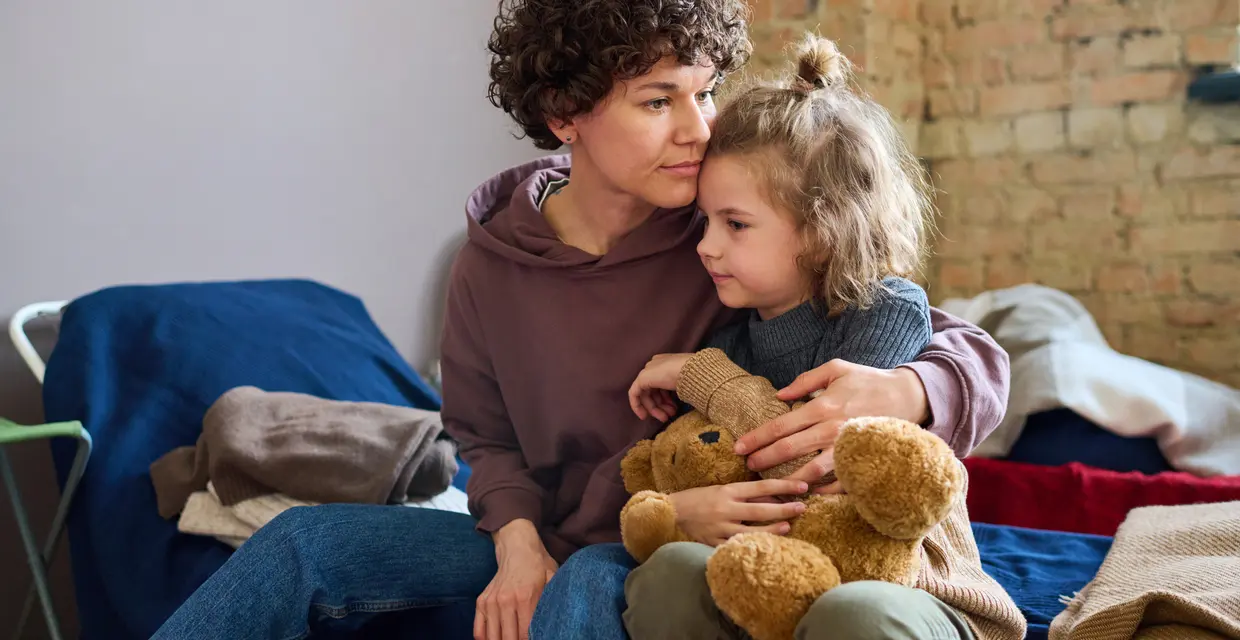
Imagine making this decision: Do you spend another day in your home with an abusive partner, or do you spend a night—or more—in your car, possibly with your children or four-legged family members?
For many survivors, that choice isn’t hypothetical. Between 22 and 57 percent—of women experiencing homelessness say domestic violence is the primary cause of their housing loss, according to surveys. It’s also estimated that 38 percent of all domestic violence victims become homeless at some point in their lives.
When a domestic violence shelter is full, returning to an abuser or sleeping in a car can feel like the only two options. The truth is, they’re not. But across the country, domestic violence shelters are often operating at or beyond capacity.
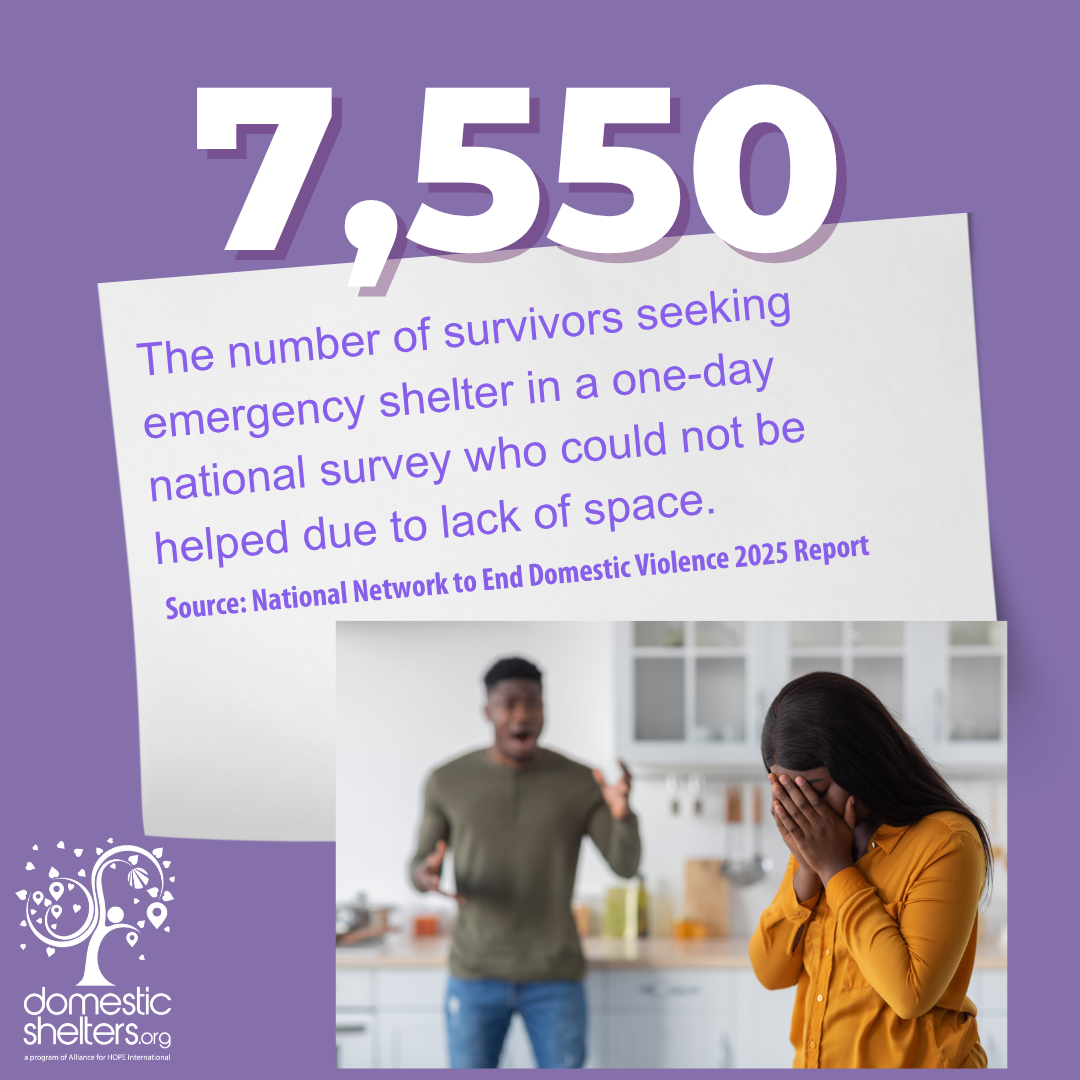
In a 24-hour survey, more than 1,700 domestic violence programs across the country reported they could not meet 13,018 requests for services from survivors because of limited resources, according to the National Network to End Domestic Violence (NNEDV). Fifty-eight percent of those requests were for shelter, hotel or motel stays, transitional housing or other housing.
There is not a federal law requiring a domestic violence shelter to find a survivor alternate shelter placement if they’re full. However, some state regulations require shelters make referrals or attempt to find the survivor other lodging. In West Virginia, for instance, state regulations require that shelters have a written policy for obtaining “alternative lodging, including hotels, to house victims or survivors when the residential facility is not appropriate or available, filled to capacity, or to meet individualized needs.”
Isaiah Castillo is a shelter advocate at S.A.F.E. House in New Mexico says when their shelter is full, advocates typically encourage survivors to call back the next day in case a bed opens up. In the meantime, staff provide referrals to other programs. But it is up to the survivor to contact those shelters themselves.
“If we’re full, we give them numbers for other places,” Castillo says. “But they have to make those calls.”
Some domestic violence programs offer hotel or motel vouchers for survivors when no rooms are available at local shelters. These vouchers are often only available for a few nights but can work as a temporary solution to get out of an unsafe situation.
Survivors can sometimes request a hotel voucher from a local domestic violence organization. But because funding is limited, advocates often reserve those vouchers for survivors facing the most immediate danger. Someone who is at risk of violence or even homicide that day may be prioritized for emergency housing, while survivors who feel relatively safe for the moment may be asked to wait for a shelter bed to open or stay temporarily with friends or family. Most shelters simply do not have the budget to place every survivor in a hotel. You can read more about hotel vouchers at “When Shelters Reach Capacity, Hotels Become Lifelines.”
Local charities and religious organizations such as United Way, The Salvation Army, and churches, synagogues and mosques may also have access to hotel or motel vouchers for emergency situations.
Transitional housing is designed for those survivors who need more time than a shelter can allow. This type of housing might look like apartments, modular units or shared homes. Residents at transitional housing usually stay anywhere from six months to two years, whereas most shelters have anywhere from a 30- to 90-day limit. When a survivor is matched with transitional housing, they’re also encouraged to reach goals around economic stability. They may have a caseworker who helps them reach those goals through rental assistance, financial literacy classes and counseling treatment for trauma. Depending on your situation, you might qualify for transitional housing without first staying at a shelter. For more information, see “Transitional Housing for Survivors.”
TANF funds are state-based programs intended to provide short-term emergency help to families who are homeless or at a risk of becoming homeless. TANF assistance can be a resource for low-income domestic violence survivors who need temporary help with paying rent, a security deposit, utilities or moving expenses. TANF funds are generally a one-time-use case.
You can apply for TANF help with your county social services office.
Homelessness resources may also be accessed through the HUD Exchange website.
The LIHTC program is the largest federal program designed to encourage developers to create affordable rental housing for low-income U.S. families. The Violence Against Women Act includes housing protections for domestic abuse survivors to apply for and live in LIHTC housing.
Your local domestic violence shelter or domestic violence coalition can help you apply for LIHTC housing.
Survivors are often the ones who flee a shared home in order to escape an abusive partner. And it doesn’t seem fair—why should the survivor be the one to find a new place to live? But sometimes, this is the safest option, at least in the short-term, as going somewhere the abuser can’t find you could save your life.
However, there is another option if you feel it’s safe for you to stay put. A “kick-out order,” also known as a move-out order or residence exclusion, is a provision that can be requested as part of an order of protection. When granted, they decree the abuser is court-ordered to move out of the residence, typically after one visit back to retrieve personal items, accompanied by law enforcement.
However, the boundaries of these provisions vary widely from state to state, so make sure to talk to a trained domestic violence advocate or attorney about the laws that exist where you live. Kick-out orders can also be complicated to obtain. In California, for example, documentation of physical violence almost always has to be presented to a judge, among them, police and hospital reports.
Talking to an advocate at a domestic violence shelter can uncover additional resources beyond just their shelter. Is there a women and children homeless shelter in your area? How about a local church that could open its doors as a safe haven for survivors? Can you search for a room to rent in someone’s home? If your resources allow, can you rent a hotel room for a night or two until you can get a restraining order or contact out-of-town family members?
Though it’s not possible for all survivors, especially those with children, survivors who are able may find that moving temporarily to a different city, state or even country will provide more housing opportunities. This may also give a survivor the added benefit of being in a place where it’s harder for their abuser to stalk or harass them.
Abusers will often use financial or coercive control to convince victims and survivors to return to an unsafe situation under the guise of safety. You may hear assurances like, “I’m so sorry, I’ll never touch you again,” or threats of financial demise—“You can’t afford to live anywhere else; I pay the mortgage.” Abusers may even threaten to take away children if you go to a shelter, but there are steps you can take to prevent this. See “Ask Amanda: Can I Lose My Children If I Go to a Domestic Violence Shelter?”
These forms of manipulation are very dangerous—abusers know how to say what victims want to hear and will go to extreme lengths to get a victim to return to an unsafe situation where the abuser has as much power and control as possible.
That’s why it’s critical not to give up if you’re not able to get space at a shelter. Domestic violence advocates should have more options at their disposal. They will also work with victims to create a safety plan that helps discuss and outline options on how to handle unsafe situations for both the victim and their children, if necessary.
To find more articles and resources surrounding housing options, safety planning or other facets of abuse, talk to our Hope Chat on the bottom of the screen, an AI assistant that can direct you to helpful information.
Your support gives hope and help to victims of domestic violence every day.

Welcome, this is your discreet connection to help.
You are safe here.
Menstruation is an experience shared by
generations of women across the globe.
Sadly, abuse is another commonly shared experience between women.
Be it physical or psychological, abuse is not OK in any form.
Period.
You are not alone.
Help is just a few clicks away.
Welcome to DomesticShelters.org, a trusted Bright Sky US partner. On DomesticShelters.org, you will find free domestic violence resources such as:
The Bright Sky US website is still open on your browser in a separate tab, so you can return to the Bright Sky US website anytime.