1. Select a discrete app icon.








notes

Recovering from trauma is a process, and your home environment plays a real role in how that process unfolds. When you feel safe in your physical space, your nervous system gets a signal that you are no longer in danger. That signal matters, especially in the early stages of healing.
This guide walks you through practical, low-effort ways to create a space at home where you feel calm, grounded and secure, whether you are a survivor of domestic violence, someone working through anxiety or PTSD, or a person who simply needs a place to decompress.
Trauma changes how your brain and body respond to the world around you. Even after a dangerous situation has ended, your nervous system may stay on high alert. Sights, sounds, smells and textures can all trigger a stress response, even when there is no real threat present.
This is not a character flaw. This is how trauma works. Your brain learned to protect you, and it keeps doing that job long after the danger has passed.
Creating a safe, predictable environment at home gives your nervous system something it can count on. Over time, consistent physical safety helps your body start to settle, which makes space for emotional healing to take root.
Feeling safe after trauma looks different for everyone. For some people it means having control over who enters their home. For others, it means removing clutter that feels overwhelming or adding soft textures that are calming to the touch.
Safety is both physical and emotional. Physical safety means your environment is free from real threats. Emotional safety means you feel able to relax, express how you feel and exist without being on guard. Both matter. And both are worth tending to.
You do not need to overhaul your entire living situation to feel better. Small, deliberate changes can make a real difference. Start with what you have access to, and build from there.
Your body processes safety through physical sensation.
If you are looking for a blanket to keep nearby, look for something soft, breathable and easy to care for. Thread Talk blankets are made from Oeko-Tex certified or 100 percent organic cotton materials, and 10 percent of every purchase goes directly to DomesticShelters.org.
A sense of control over your surroundings is a core part of feeling safe. After experiencing trauma, especially in situations where control was taken away, reclaiming small choices in your environment can feel restorative.
Many people with trauma histories are sensitive to sensory input. Loud sounds, bright lights, strong smells and chaotic environments can all push the nervous system into a stress response.
Predictability helps the nervous system relax. When you know what comes next, your brain does not need to stay on alert for what might happen.
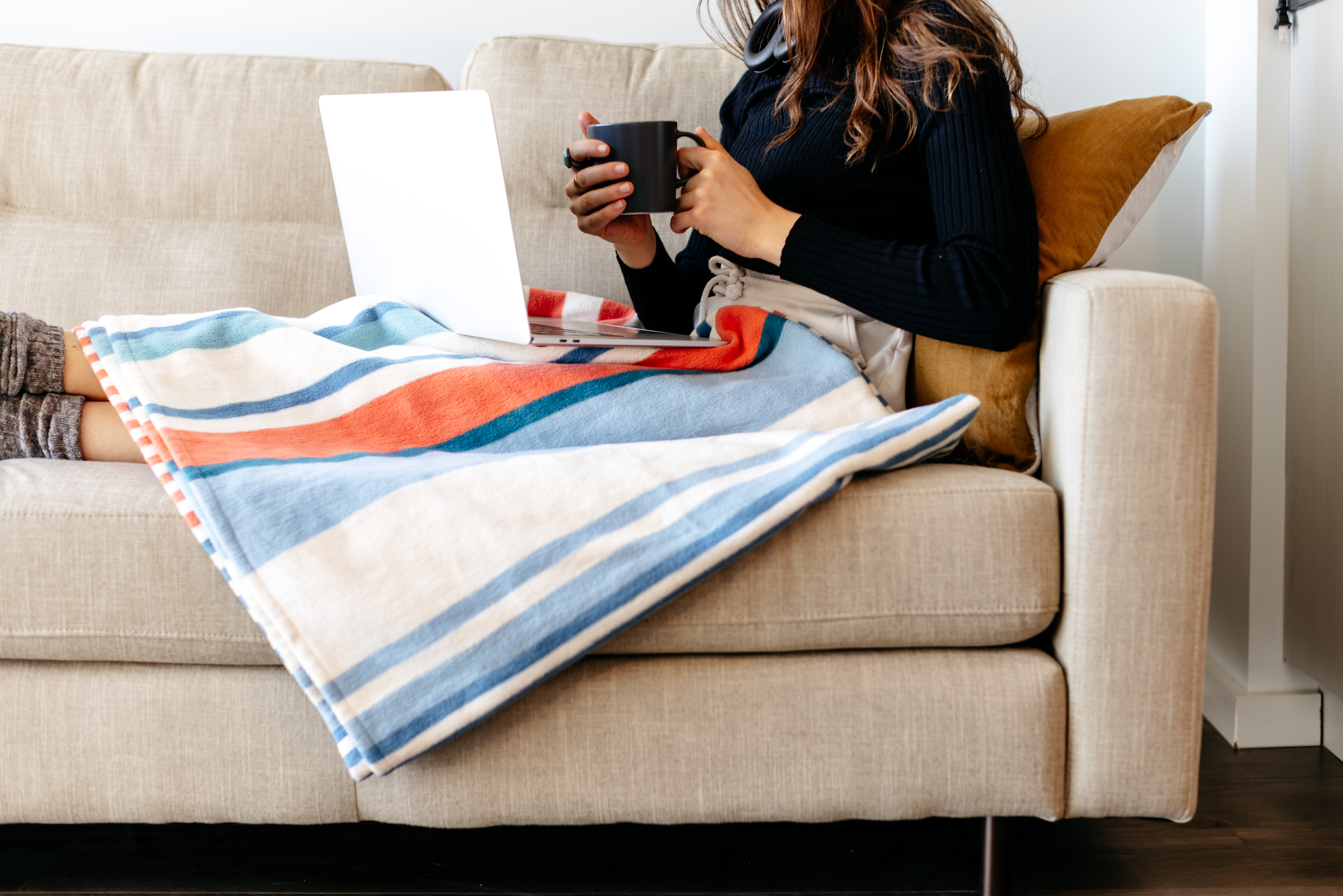
Emotional regulation is the ability to manage and respond to your feelings in a way that does not overwhelm you. Trauma often disrupts this capacity, not because of weakness, but because trauma rewires how the brain processes stress.
Physical comfort plays a direct role in supporting emotional regulation. When your body feels physically at ease, your brain receives input that reduces the threat response. Soft textures, warmth and familiar sensory experiences all contribute to this.
Grounding techniques at home, which bring your attention back to your physical body and present surroundings, are among the most accessible tools for emotional regulation. Some examples include:
These are simple, free and effective. They work best when practiced regularly, before a crisis, so they become automatic when you need them.
DomesticShelters.org offers additional resources on trauma recovery and emotional support for survivors.
If you find it hard to relax at home, even in a space that feels objectively safe, that is a common experience among trauma survivors. It does not mean something is wrong with you, and you aren’t alone.
Hypervigilance, which is the state of being on constant alert for potential danger, is a trauma response. Your nervous system learned to protect you by staying ready. That readiness does not simply switch off when the external threat is removed.
Other reasons relaxation feels difficult after trauma:
This is why creating a safe space is a gradual process, not a one-time fix. Each small, positive experience you have in your home environment helps your nervous system build new associations. Over time, rest and relaxation become things your body learns to trust again.
Creating a calming home environment is a meaningful step. It is also one piece of a larger picture. If your symptoms are significantly affecting your daily life, your sleep, your relationships, or your ability to function at work or school, please consider reaching out for professional support.
A trauma-informed therapist, counselor, or mental health provider can offer tools and support that go beyond what a physical environment alone provides. You do not have to reach a certain level of crisis before asking for help. Wanting support is enough.
If you are in a situation involving domestic violence or are not yet in a safe place, please use the Get Help tool or Hope Chat at the bottom corner of your screen to find local resources that can help, like a trained domestic violence advocate.
Healing is not linear and creating a safe space at home is not something you do once and check off a list. It is something you return to, adjust and build on over time. Start small. One soft blanket. One consistent routine. One corner of your home that belongs to you. These are not small things. They are the foundation of feeling like yourself again.
If you are supporting a survivor, the same principle applies. The most meaningful support is often the most practical and tangible. Think of a soft, weighted blanket they can wrap up in after a long day, a cozy throw for their couch, a warm robe, a set of quality sheets, or a gift card for something they need to make their space feel like home. Small, thoughtful items send a clear message: someone sees you, and someone cares.
Comfort is something everyone deserves, and it is something organizations can help provide. Hannah Kay Herdlinger started Thread Talk after surviving domestic violence herself, with one clear belief: every survivor deserves comfort, dignity and a reminder that they are not alone.

Every purchase from our store donates 10 percent to DomesticShelters.org, including corporate orders. If you work in HR, office management or people operations, Thread Talk's corporate gifting program gives your team a way to source gifts that directly support survivors.
And if you or someone you know needs immediate support, DomesticShelters.org connects survivors to local shelters and resources across the country. You deserve to feel safe. That is not a luxury. That is the starting point.
Start with physical comfort. Add soft textures, reduce sensory overwhelm, and create one area in your home specifically for rest or grounding. Give yourself control over small decisions in your environment. Build daily routines that help your nervous system predict what comes next.
Trauma puts the nervous system on high alert, a state called hypervigilance. Even after the external danger has ended, the brain and body stay watchful. Relaxation may feel uncomfortable because vulnerability was associated with harm. This is a normal trauma response, not a permanent condition.
Grounding techniques are among the most effective options. Try holding a soft object and focusing on its texture, pressing your feet firmly to the floor, or using slow, extended exhales. Physical comfort, including warmth and soft fabrics, also sends calming signals to the nervous system.
Yes. While home changes are not a substitute for professional support when it is needed, the environment has a measurable effect on mood, stress levels, and emotional regulation. Reducing overstimulation, adding comforting textures, and building predictable routines all support mental wellbeing.
Your support gives hope and help to victims of domestic violence every day.

Welcome, this is your discreet connection to help.
You are safe here.
Menstruation is an experience shared by
generations of women across the globe.
Sadly, abuse is another commonly shared experience between women.
Be it physical or psychological, abuse is not OK in any form.
Period.
You are not alone.
Help is just a few clicks away.
Welcome to DomesticShelters.org, a trusted Bright Sky US partner. On DomesticShelters.org, you will find free domestic violence resources such as:
The Bright Sky US website is still open on your browser in a separate tab, so you can return to the Bright Sky US website anytime.


